
Travertine Floor Maintenance
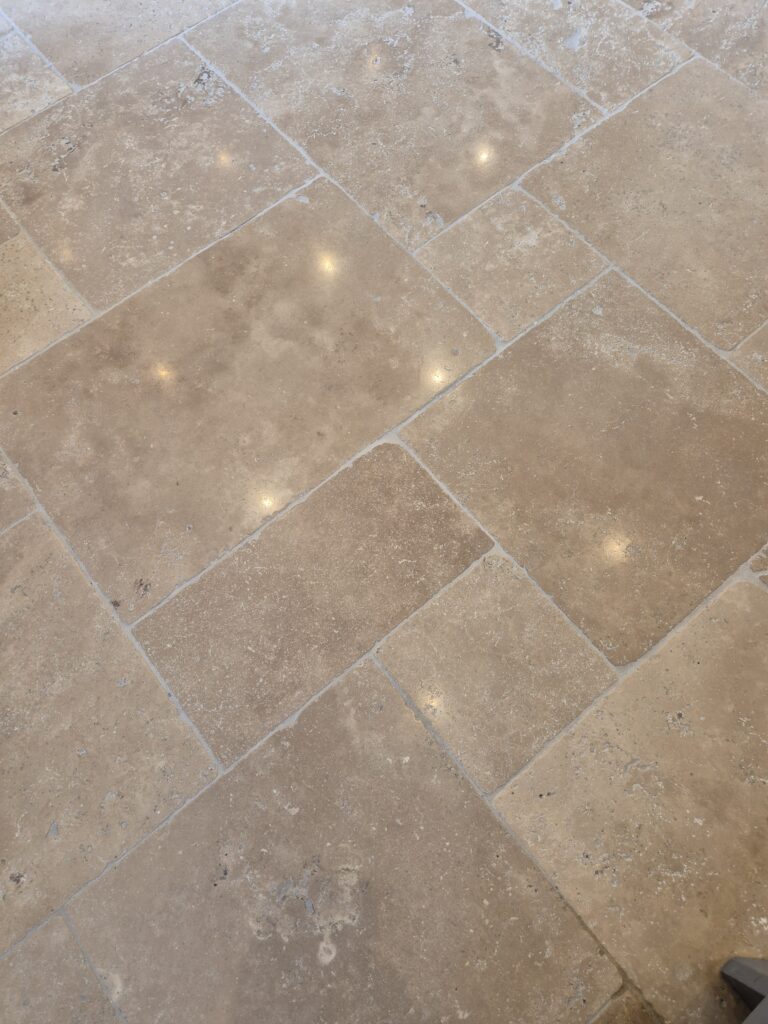
What Is A Travertine Floor? Travertine is a form of limestone that is created by mineral deposits from natural hot springs. This sedimentary rock is known for its distinctive porous appearance, which results from trapped gases and organic matter during its formation. Travertine has been used for building and decoration for thousands of years, most famously in the construction of the Roman Colosseum. Its unique beauty, durability, and versatility have made it a popular choice for flooring in both residential and commercial spaces. Travertine floors offer a blend of rustic charm and timeless elegance. The natural stone comes in a wide range of colors, from soft ivories and creamy beiges to rich browns and subtle golds, depending on the minerals present during its formation. The surface can be finished in various ways, including tumbled, honed, brushed, or polished, each offering a distinct aesthetic and texture. However, the defining characteristic of travertine is its natural porosity. These tiny holes, or pores, are a direct result of the gas bubbles that were trapped within the stone as it formed. The size and frequency of these pores vary significantly between different types of travertine, which directly impacts its suitability for specific applications. Travertine is a medium-to-high absorbency floor, which means it can easily soak up liquids. This characteristic makes it vulnerable to staining and dirt penetration if not properly sealed and maintained. Understanding the nature of your specific travertine floor is the first and most crucial step in its proper care. Best Travertine Tiles The term “best” when it comes to travertine tiles is subjective and depends entirely on the intended use and location. There are numerous types of travertine tiles, each with its own set of characteristics related to origin, size, and porosity. Differences in Travertine Tiles: Origin, Size, and Porosity Origin: Travertine is quarried all over the world, with major deposits found in Italy, Turkey, Mexico, and Iran. The location of the quarry often influences the color, veining, and overall quality of the stone. For example, Italian travertine, such as the famous Roman Travertine, is highly prized for its classic elegance, while Turkish travertine is known for its creamy, light colors. Size: Travertine tiles are available in a wide variety of sizes, from small mosaics to large format slabs. The size choice often depends on the design aesthetic and the scale of the room. Porosity: This is perhaps the most critical factor to consider. Travertine tiles can have small holes or large pores. Choosing the Right Travertine for Your Space All travertine floors are beautiful, but for different reasons. For a busy commercial space, a low-porosity, high-density travertine is the “best” choice due to its resilience and ease of maintenance. For a cozy, low-traffic residential area, a high-porosity, tumbled travertine might be the “best” choice for its rustic, natural aesthetic. The key is to match the tile’s characteristics with the demands of the environment where it will be installed. How To Seal Travertine Floors Sealing is a non-negotiable step for any travertine floor, regardless of its porosity. This process involves applying a protective impregnator that penetrates the stone’s surface to create a barrier against spills, dirt, and stains. Sealing is a proactive measure that drastically reduces the need for aggressive cleaning and prevents permanent damage. The Sealing Process Travertine Floor Impregnators Impregnators are the best type of sealant for travertine. Unlike topical sealers that form a layer on top of the stone, impregnators penetrate deep into the pores, creating a protective barrier from within. This allows the stone to “breathe” while effectively repelling liquids. Faber is a well-known manufacturer of effective and natural travertine floor impregnators. You can choose a natural, semi-gloss, or glossy impregnator to increase or decrease the sheen level of your floor. This allows you to not only protect the stone but also to enhance its aesthetic appeal. How To Polish Travertine Floors Polishing is the process of enhancing the natural shine of a travertine floor. Over time, even a sealed and well-maintained floor can lose its luster due to foot traffic, micro-scratches, and general wear and tear. Polishing can restore a dull, tired-looking floor to its former glory. Professional Travertine Floor Polishing While it’s possible to do some polishing yourself, it is highly recommended to hire a professional travertine floor polishing company for a truly effective and safe restoration. Professional polishers have the right tools and expertise to handle the complexities of different travertine types. DIY Travertine Floor Polishing For a basic DIY polishing project, you can use a polishing powder or a cream designed for natural stone. Important Note: DIY polishing can be risky. Using the wrong products or techniques can lead to etching, swirling, or permanent damage to the stone. Always test the product in an inconspicuous area first. Diamond Pad Polishing Diamond pad polishing is one of the most effective methods for restoring dull or scratched travertine floors. This system involves a series of diamond-impregnated pads, each with a different grit level. Diafil Discolux Diamond Polishing Pads are known for their effectiveness in restoring travertine floors. A system of four pads can significantly enhance the sheen of a tired floor. How To Maintain Travertine Floors Daily maintenance is the key to preserving the beauty and longevity of your travertine floors. Proper maintenance routines prevent dirt from building up and reduce the need for aggressive cleaning and polishing. Daily Cleaning Spills and Spot Cleaning How To Protect Polished Travertine Floors Once your travertine floor has been polished, it’s crucial to take extra steps to protect its new shine. Best Travertine Floor Cleaners Choosing the right cleaner is paramount for the long-term health of your travertine floor. The best cleaners are those that are gentle, effective, and do not compromise the integrity of the stone or its sealer. Why PH-Neutral Cleaners? The PH scale measures the acidity or alkalinity of a substance. A PH of 7 is neutral. Natural stones like travertine are sensitive to both highly acidic (low PH) and highly alkaline (high PH)